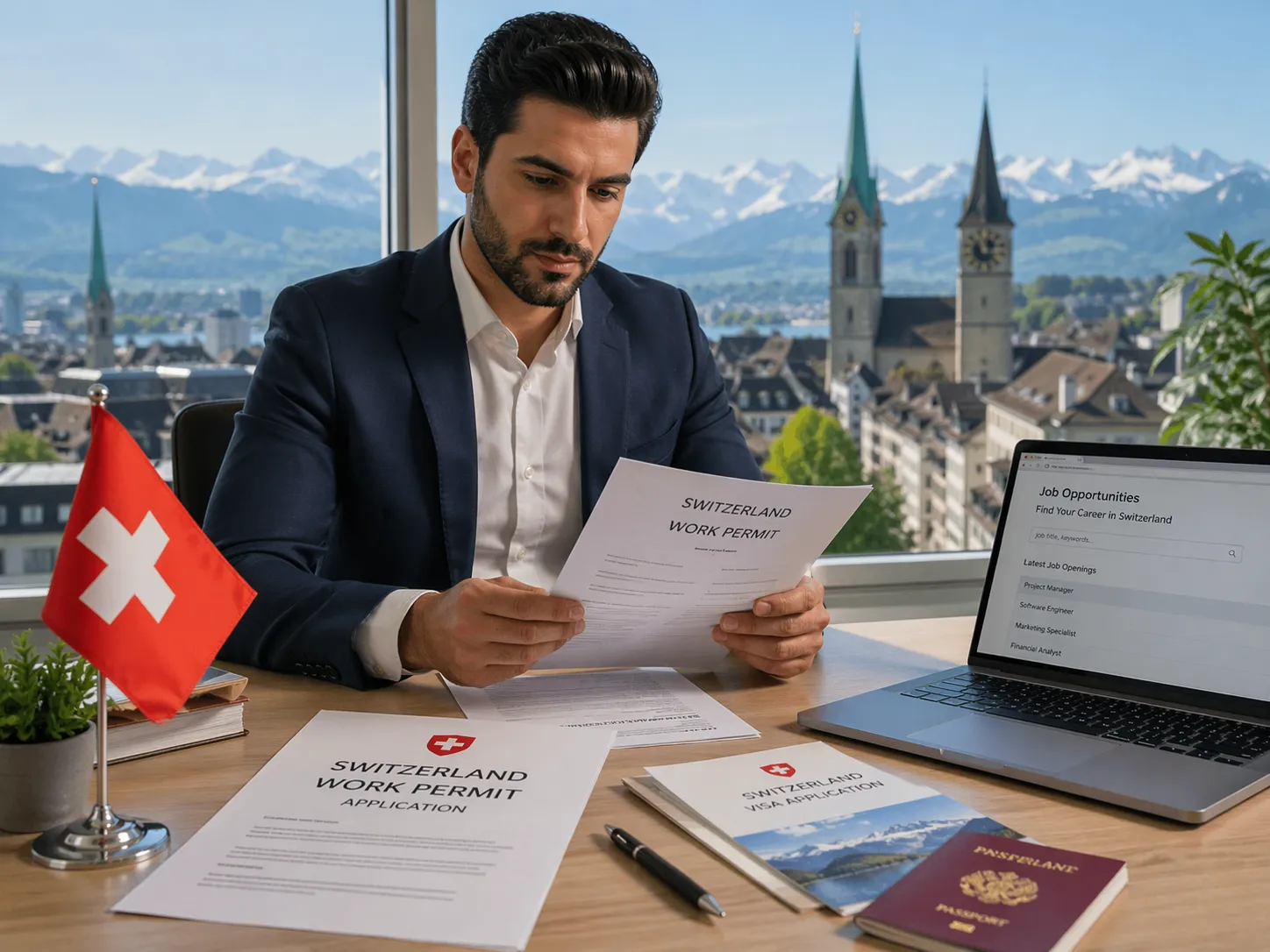
Registration and First Steps in Switzerland
10 min read
Your first 30 days in Switzerland, from Gemeinde registration and the 14-day deadline to the permit card, bank account, health insurance, phone, AHV, and the common rookie mistakes to avoid.
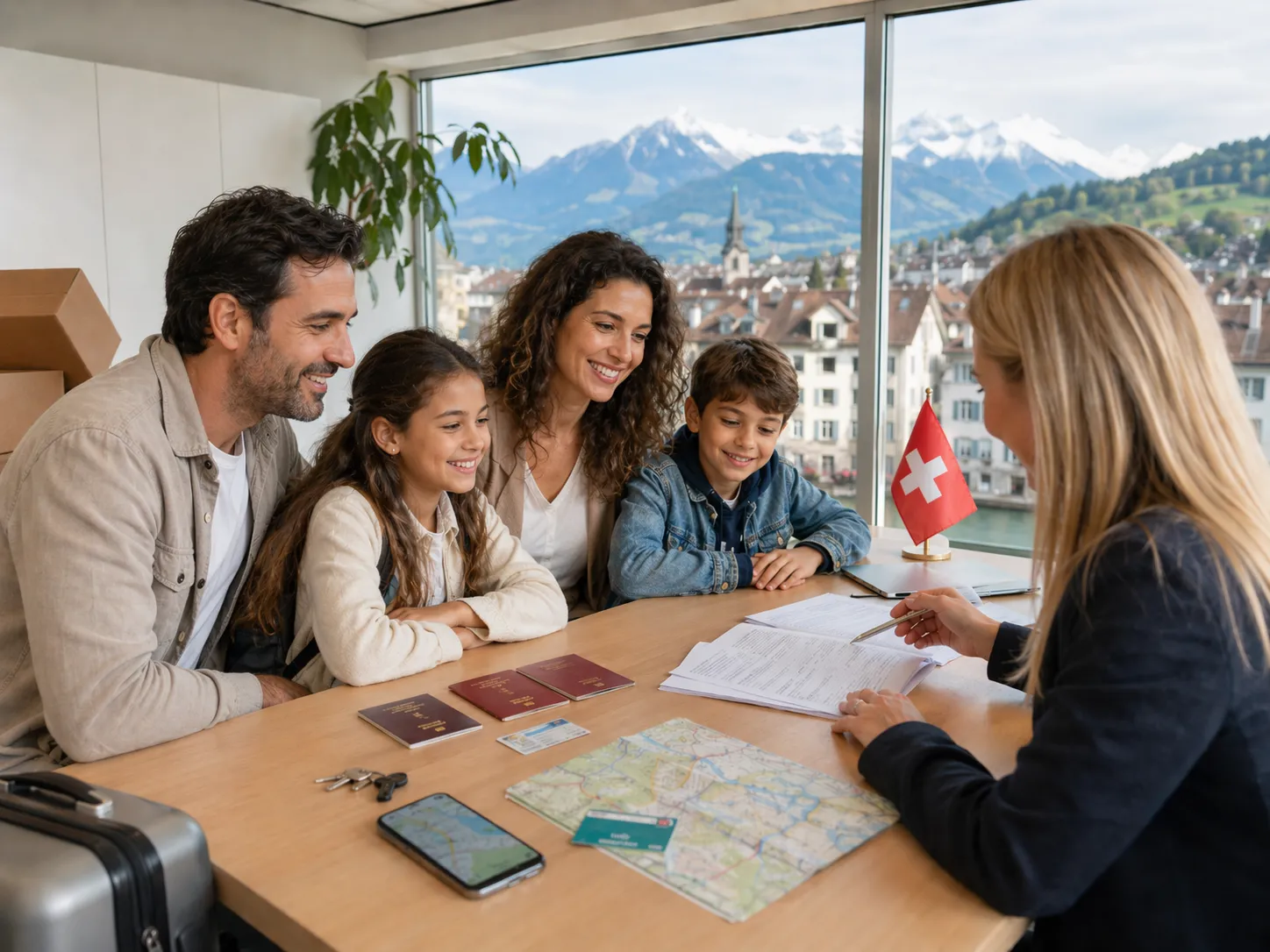
Once your visa is approved and the moving truck has left, the real work begins: Swiss administration. The process is famously predictable, and if you do things in the right order and hit the deadlines, you will be fully set up within about a month. This guide walks you through every step, points to the deeper KantonLand guides for each topic, and flags the mistakes newcomers make most often.
1. Before You Land: Preparation Checklist
Use the last weeks at your old address to gather documents, cancel contracts, and prepare the move. It is much cheaper to handle these tasks from your home country than to fix them from Switzerland.
Document Pack
You will need the same documents again and again in your first weeks. Gather them before you travel, ideally in a single folder (paper plus scans on your phone). Some of the most common documents you will need are:
- Valid passport, plus national ID if you are an EU citizen.
- Marriage certificate if you move with a spouse.
- Birth certificates for any children moving with you.
- Swiss employment contract or official letter from your employer.
- Rental contract for your Swiss home, or a landlord confirmation letter if the contract starts later.
- Diplomas and professional certificates, with translations only if they are not in a Swiss official language or English.
- Criminal record extract from your home country, dated within the last 3 months.
- Passport-size biometric photos, four is a safe number.
- Proof of health insurance or a clear intent to enrol in a Swiss basic plan.
Non-EU applicants often also need their Type D visa pasted into the passport before flying in. Landlords typically also ask for an extract from the debt collection register (Betreibungsregisterauszug). You can only obtain the Swiss version once you have a Swiss address, so bring an equivalent credit or no-debt statement from your home country for apartment viewings.
Deregister and Close Out in Your Home Country
Some tasks only make sense before you leave:
- Deregister from your previous place of residence with the local authorities. This stops home-country taxes and other obligations from running in parallel with your Swiss registration.
- Cancel mobile and internet contracts with enough notice, since most home-country contracts have notice periods of one to three months. Roaming on a non-Swiss SIM after the move is expensive, and Switzerland is not in the EU.
- Set up mail forwarding from your old address. A few months of forwarding is usually enough to catch stragglers from banks, tax offices, and insurers.
- Ask your home-country pension provider what happens to your occupational pension contributions when you switch to a Swiss employer. Rules differ by country, and some schemes allow a transfer into the Swiss second pillar.
- Schedule check-ups with your doctor and dentist before you leave. Swiss healthcare is good but expensive, particularly dental care, which basic insurance does not cover.
Prepare an Apartment Application Dossier
Swiss landlords usually pick their tenant from a pile of complete applications, so drafting your Bewerbungsdossier before you move pays off. A short application letter introducing yourself and your household, your employment contract, your ID, a debt-extract equivalent, and a copy of your residence permit (once issued) make the process much faster at viewings. Our renting guide walks through the full landlord screening.
Declutter and Pack Light
Swiss apartments are typically smaller than those in the US, the UK, or many EU countries, and rent is higher per square metre. It almost always pays to declutter before the move rather than paying to ship items you will not use. For household effects, follow the customs declaration guide, which covers Form 18.44, the six-month ownership rule, and the two-year import window.
One practical note once you arrive: Switzerland uses a three-prong plug that is not compatible with UK, US, or many European plugs, so pack adapters for your essentials.
2. Day 1 to 14: Register at the Gemeinde
This is the single most important step. Within 14 days of moving in, you must register at your Gemeinde (German-speaking Switzerland), commune (Romandie), or comune (Ticino). The office is called the Einwohnerkontrolle or Contrôle des habitants.
What Happens at the Office
- You provide your address, personal details, and family information.
- You hand over the documents from the checklist above.
- You receive a registration confirmation (Anmeldebestätigung or attestation d’établissement) that serves as proof of residence until your permit card arrives.
- The commune forwards your permit application to the cantonal migration office.
Your permit card (Ausländerausweis or permis de séjour) is sent by post within several weeks. Until then, the registration confirmation is enough to open utilities and most banks. Not registering on time is the number-one rookie mistake, because it blocks banking, insurance, and employment administration and can trigger fines. Book the appointment the week you arrive.
Short Stays and the Notification Procedure
If you are an EU or EFTA national (or posted by an EU/EFTA company) and you plan to work in Switzerland for up to 90 days per calendar year, you do not need a residence permit. You can register online through the Swiss State Secretariat for Migration’s notification procedure instead. The 14-day communal registration only applies to stays that require a permit.
3. First Two Weeks: The Parallel Admin Stack
The tasks below can all be kicked off in your first fortnight. You do not need to wait for the permit card to land.
Open a Swiss Bank Account
Bring your passport, registration confirmation, and employment contract. Compare providers before you commit, because non-Swiss nationals often face higher fees at traditional banks. Digital banks (Neon, Yuh, Zak, Revolut CH) tend to open in a day, while traditional banks (UBS, ZKB, Raiffeisen, Migros Bank) usually take longer.
A useful caveat: not every bank accepts every permit type. Short-term L permits in particular are often declined at the big banks. If you hold an L permit, check with the bank before you book a branch appointment, or start with a digital bank that has lighter permit requirements. The bank accounts guide covers the best choice given your salary and usage.
Enrol in Health Insurance
Basic health insurance (KVG or LAMal) is mandatory and must be in place within 3 months of arrival. Coverage is backdated to your entry date, so you pay from day one whether you sign up early or not. Insurers cannot refuse basic coverage, but premiums vary significantly by canton, age, and model. Our health insurance calculator compares all approved insurers, and the health insurance guide explains how to pick a deductible and a model.
Sign Up for a Swiss Phone Plan
A Swiss number is useful from day one, because most services (banks, delivery companies, SBB) expect a local contact. Prepaid SIMs (Salt Prepaid, Wingo, Lidl Connect) work immediately with a passport. Postpaid plans usually require the permit card. Compare options in the mobile plans guide.
Arrange Home Internet
Fibre coverage is excellent in cities and variable in rural areas. Check availability at your exact address before you sign, and use the home internet plans guide to compare speeds and prices.
Register with Your Employer’s Pension Fund
Your employer automatically enrols you in the second pillar (BVG or LPP) occupational pension. You will receive documentation within a few weeks. If you change jobs in your first year, remember to move your pension balance to the new fund rather than leaving it behind.
Personal Liability Insurance
In Switzerland, personal liability insurance is not always mandatory, but it is usually purchased. See the personal liability insurance guide to understand more about it, and don’t hesitate to contact us if you need any assistance.
Electricity, Tenant Insurance, and Serafe
- Electricity is usually billed directly by your canton’s provider. Register online once the lease starts.
- Home contents and personal liability insurance (RC ménage et responsabilité civile) are mandatory in a handful of cantons and standard practice elsewhere. Landlords often expect them. Even where they are optional, both policies are usually worth taking out. See the home contents insurance guide and the personal liability insurance guide.
- Serafe, the Swiss collection agency for radio and TV, charges a household fee regardless of whether you own a TV. The bill arrives automatically once you register at the Gemeinde.
4. First Month: Longer-Running Tasks
Exchange Your Driving Licence
You have 12 months from your arrival to swap your foreign driving licence for a Swiss one at the cantonal traffic office (Strassenverkehrsamt). After 12 months, an unexchanged licence is no longer valid for driving in Switzerland. Some nationalities must take a control drive, most do not. Details in the driving guide.
Register Your Car
If you brought a car, the registration deadline at your cantonal traffic office depends on its status:
- Used cars: within 12 months of arrival.
- New cars: within 1 month of arrival.
Swiss registration involves a technical inspection, Swiss insurance (liability is mandatory), and a set of Swiss plates. Customs clearance happens at the border, so keep the stamped Form 18.44 and the supporting receipts. Full details in the driving guide and the customs declaration guide.
AHV and the First Pillar
Your employer registers you with the cantonal compensation office (Ausgleichskasse). You will receive your AHV number by mail, which is your lifetime Swiss social security ID. Self-employed residents must register themselves directly with the compensation office.
Children and Schools
If you move with children, the commune tells you which public school they will attend. Registration happens at the commune’s education office. International schools need to be contacted directly and often operate with waiting lists, so start those conversations as early as possible.
Consider a Third Pillar
Once your salary starts landing and your basics are covered, a 3a pillar account is one of the fastest tax wins available to residents, because it reduces your taxable income and grows tax free. The pension guide explains how to choose a provider and how much to contribute.
Optional but Useful: Legal Protection Insurance
Legal disputes in Switzerland can become expensive quickly. Legal protection insurance covers the cost of legal advice and court fees for private or traffic matters. It is not mandatory, but it is worth comparing providers. For tenancy disputes specifically, joining the Tenants’ Association (Mieterverband) gives you access to free legal advice on rental issues. The legal insurance guide walks through the main options.
5. Common Questions
What if I miss the 14-day registration deadline?
I'll only be in Switzerland for a few months. Do I still need a permit?
Can I open a Swiss bank account before my permit card arrives?
Do I need home contents or personal liability insurance?
How should I handle mail from my old address?
Do I really need to deregister in my home country?
What about pets and household goods at the border?
6. Conclusion
Switzerland is a bureaucratic country, but an orderly one. The first month is front-loaded with admin, and the secret to a smooth landing is sequence: prepare the document pack before you fly, register at the Gemeinde in the first fortnight, and run banking, insurance, telecom, and pension setup in parallel over the following weeks. Longer deadlines like the driving licence exchange and the car registration then give you room to settle in without losing sleep.
If you follow the checklist in order and use the deeper KantonLand guides for each topic, the bureaucracy is the simplest part of the move, and the rest of the first year can go toward enjoying the country.
Useful Resources
- ch.ch: moving to Switzerland: the Swiss government’s newcomer portal
- State Secretariat for Migration (SEM): permits and the notification procedure for short EU/EFTA work stays
- Federal Office for Customs and Border Security (BAZG): customs rules and Form 18.44
- Priminfo: official basic health insurance premium database
- Swiss Post mail forwarding: for moves within Switzerland