Customs Declaration Switzerland: Moving and Registering Your Household Effects
7 min read
How to bring your household goods into Switzerland duty free using Form 18.44, the six-month ownership and two-year import rules, and the specific steps for vehicles and pets.
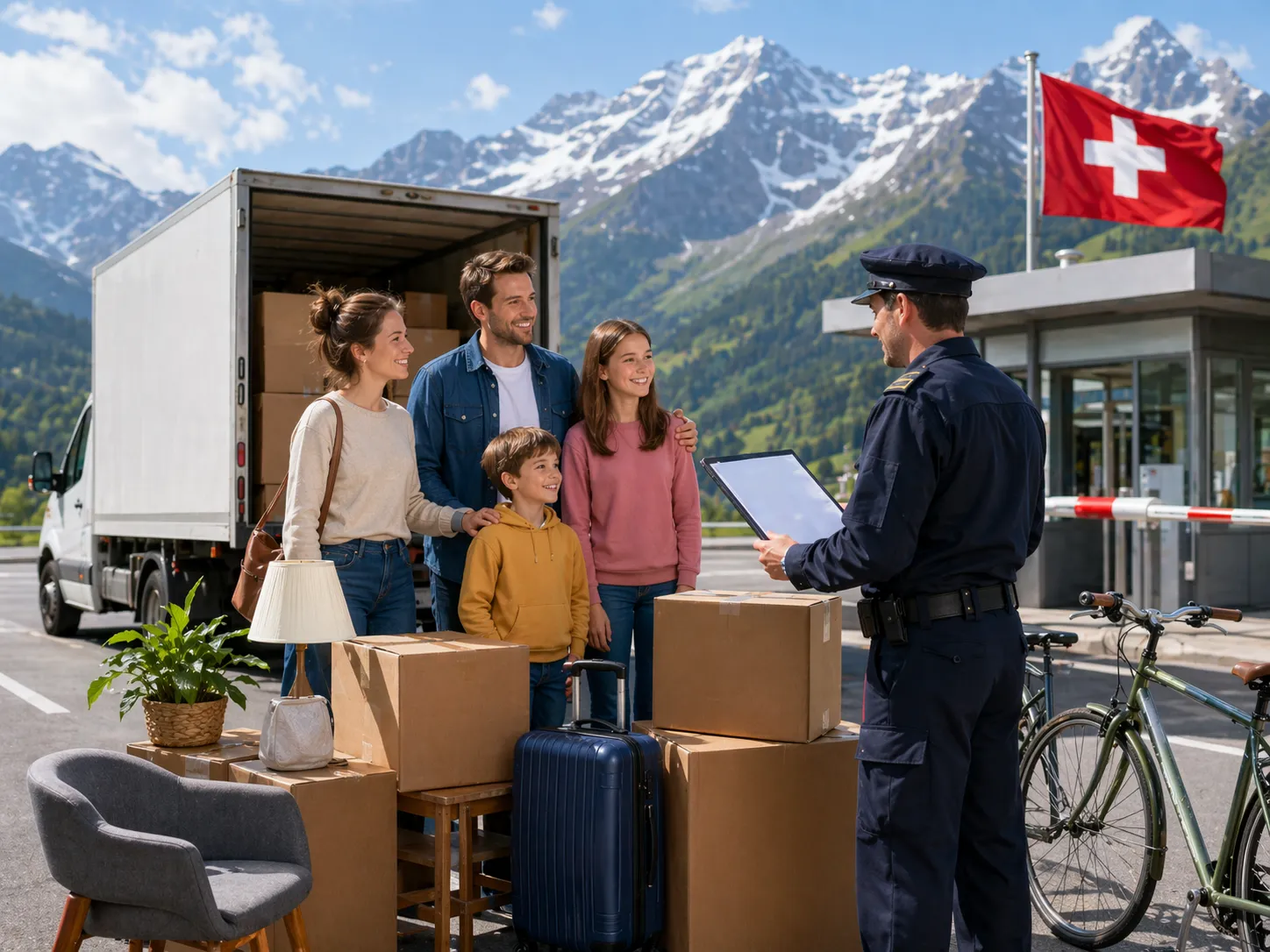
When you move to Switzerland from abroad, your used personal effects can cross the border duty free as relocation goods (Übersiedlungsgut), provided you follow the Swiss customs rules. The process is straightforward once you know which form to present, what counts as relocation goods, and the two time limits that decide whether you pay duty or not. This guide covers the essentials for household items, vehicles, and pets.
1. How Transfer of Residence Works
Switzerland lets you import your used household effects free of customs duties and VAT when you relocate your main residence from abroad. The rules are built around two time limits and one ownership test.
- You must have owned the goods for more than six months before the move. New items purchased for the move fall outside the regime and are taxed normally.
- You must bring your relocation goods into Switzerland within two years of the move. After that window, normal customs duties apply.
- If you plan to bring your belongings in several shipments, for example because your furniture arrives after you do, you must declare the split at the border when you import the first part and keep the stamped documents for each consignment.
Four categories count as relocation goods:
| Category | Examples |
|---|---|
| Home contents | Furniture, clothes, kitchenware, books, electronics, personal items |
| Collections | Art, instruments, hobby collections, jewellery in personal use |
| Animals | Your own pets (see section 4) |
| Vehicles | Cars, motorcycles, boats you already own (see section 3) |
Goods that do not fit the regime follow normal customs rules. Orders you place from abroad and ship to Switzerland are a common example, because packages usually incur customs duty and VAT unless the online shop has pre-arranged Swiss import handling. That is a separate process from your household move.
2. Documents You Need at the Border
You can declare your personal effects directly on entry, with no advance booking required. What matters is bringing the right paperwork and crossing at a customs office during its opening hours.
Paperwork Checklist
Present the following at the Swiss customs office when you cross:
- Application form 18.44, the official declaration for clearance of private effects when transferring residence, issued by the Federal Office for Customs and Border Security (BAZG).
- Proof of relocation, for example your Swiss employment contract, your new rental contract, and the confirmation of deregistration from your previous place of residence.
- Residence permit if you are a non-EU or non-EFTA citizen, or your Type D visa and employer confirmation until the permit card is issued.
- A rough inventory of your household goods. Keep receipts for newer items, especially electronics, because they help prove the six-month ownership rule at the border.
- Foreign vehicle registration certificate if you are importing a car, motorcycle, or boat.
If you use an international moving company, they fill in Form 18.44 and handle the border clearance as part of the move. If you drive a rental van yourself, you present the forms in person at a staffed crossing.
Even though customs only needs a rough inventory, it pays to draw up a detailed list with values while you pack. You will reuse it for your Swiss home contents insurance policy.
Customs Office Opening Hours
Relocation goods can only be cleared on business days during a customs office’s published opening hours. Typical hours are Monday to Friday between 7 a.m. and 5 p.m., with some offices extending into the evening or opening on Saturday mornings. Each office publishes its own schedule, so check the BAZG customs office directory before you plan the crossing and pick a staffed post rather than an unstaffed rural road.
3. Vehicles
Your own car, motorcycle, or boat counts as relocation goods on the same basis as your furniture. You must have owned and used the vehicle for more than six months before the move, and you must declare it on Form 18.44 at the border with the foreign registration certificate in hand.
Once customs issues the import clearance, the vehicle still has to be registered with Swiss plates at your cantonal Strassenverkehrsamt within 12 months of your arrival. This involves a technical inspection, Swiss insurance, and a set of Swiss plates. If the vehicle is less than six months old, leased, or otherwise does not qualify as your personal property, customs treats it as a new import and charges duties and VAT.
The full process is covered in our driving and car import guide, including the inspection, registration, and insurance steps.
4. Pets
Bringing your pet into Switzerland is duty free and part of the household move, but the animal must meet strict veterinary rules to cross the border legally.
Dogs, Cats, and Ferrets from the EU
- The animal must be microchipped (ISO 11784 or 11785 compliant). A legible tattoo is only accepted if the animal was identified before July 2011.
- You need documented proof of rabies vaccination.
- You need a valid EU Pet Passport or a passport from another European state recognised by the EU.
- The pet cannot be sold or passed on to another person after crossing the border.
Animals from non-EU countries face stricter rules, typically a veterinary health certificate, sometimes a rabies serology test, and occasionally a short quarantine. Check the requirements with the Federal Food Safety and Veterinary Office before you travel.
Extra Rules for Dog Owners
Once in Switzerland, dog owners have a few more obligations:
- Register as a dog owner with your commune of residence.
- Your vet must enrol the dog in the Swiss dog database (AMICUS) within 10 days of the animal’s entry.
- Pay the annual dog tax, which is set by the canton and can also depend on the dog’s size or breed.
Certain breeds classed as fighting dogs are regulated on a cantonal basis, and a few cantons ban specific breeds outright. If this applies to your dog, contact the cantonal veterinary office before the move to confirm whether import is possible at all.
5. Common Questions
What happens if I buy something new and bring it in the move?
Do the rules change if I order goods online and ship them to Switzerland?
Are there restrictions on alcohol, tobacco, animal food, or medicines?
Do I have to declare cash and valuables?
Does it matter whether I move from the EU or a non-EU country?
Can I split my move across several shipments?
What about firearms or other restricted items?
6. Conclusion
Swiss customs is strict but predictable. If your goods meet the six-month ownership rule, arrive within two years of your residence change, and are backed by a completed Form 18.44 and the supporting documents, the border is usually the easiest part of the move. Vehicles and pets add their own paperwork, but the logic is the same: prove that what you are bringing in is truly yours and already part of your life.
Most of the friction comes from items that sit outside the regime (new online orders, large alcohol or tobacco stocks, undeclared cash above the statutory threshold) or from missing paperwork at the office. Prepare the inventory early, bring the rental contract and permit documents, and plan the crossing during staffed opening hours.
Useful Resources
- Federal Office for Customs and Border Security (BAZG): official forms, guidance, and customs office directory
- Form 18.44 (declaration for transfer of residence): the form you hand in at the border
- AMICUS dog database: where your vet registers your dog after arrival
- Federal Food Safety and Veterinary Office (BLV): pet import rules and cantonal veterinary office list