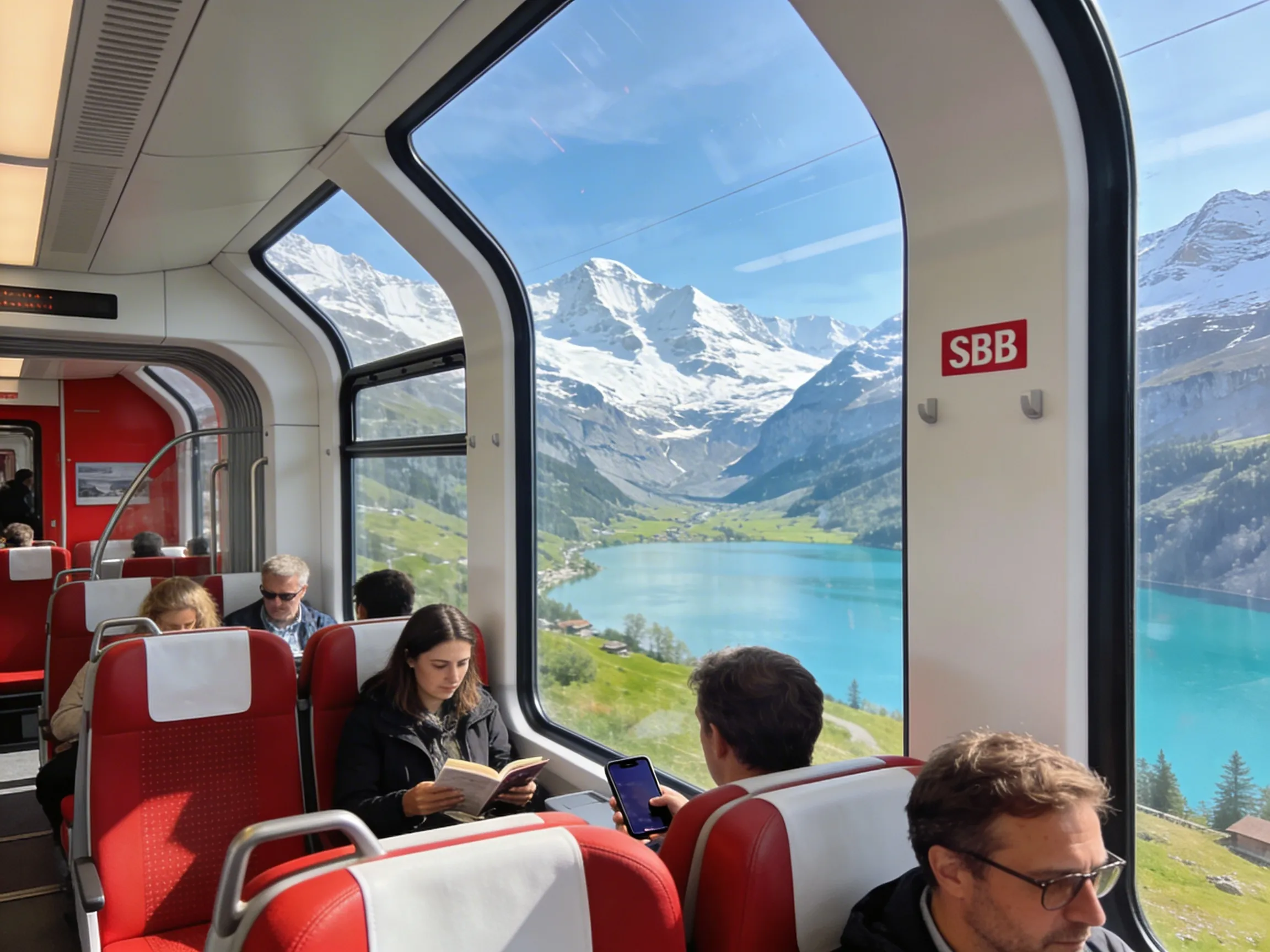
Switzerland has an exceptional public transport network, but sometimes a car is the only practical way to reach remote Alpine villages, move large items, or travel on your own schedule. If you are relocating to a new apartment, a rental van is often the most affordable option for the big move itself, which you can read more about in Moving in Switzerland: What to Know Before You Move.
The main challenge when renting a car is avoiding unnecessary costs. Between insurance upsells, airport surcharges, and hidden fees, it is easy to pay significantly more than the advertised daily rate. This guide covers how to navigate the Swiss rental market, understand your insurance options, and avoid common financial pitfalls.
1. Where to Rent
You have three main options for renting a car in Switzerland: traditional rental companies, peer-to-peer platforms, and car-sharing networks. Each serves a different specific need.
Traditional Rental Companies
All major international brands operate out of Swiss airports and major city centers.
| Company | Notes |
|---|---|
| Hertz | Large premium fleet with many locations |
| Avis | Strong international presence |
| Budget | The budget arm of Avis |
| Sixt | Known for higher-end German vehicles |
| Europcar | Excellent nationwide coverage |
| Enterprise | Good options for longer multi-week rentals |
Using booking aggregators like Rentalcars.com, DiscoverCars.com, or AutoEurope is the fastest way to compare baseline prices. However, you should always check the price directly on the chosen rental company’s website before booking. Sometimes booking directly is cheaper, and direct customers generally receive priority customer service if issues arise.
Peer-to-Peer Car Sharing
Renting directly from local car owners is often significantly more affordable than using traditional agencies, especially for multi-day trips.
| Platform | What It Offers |
|---|---|
| GoMore | Peer-to-peer rental and ridesharing with insurance included |
| 2EM | A Swiss-specific platform with excellent local selection |
These platforms work like Airbnb for vehicles. You rent a car from an individual owner. While the prices are lower, you sacrifice the standardization of a corporate fleet, meaning vehicle condition and pickup logistics vary by owner.
Hourly Car Sharing
mobility is Switzerland’s national car-sharing monopoly, operating over 3,000 vehicles parked primarily at train stations across the country. You unlock the cars with a card or app and pay a combined hourly and per-kilometer rate.
mobility is the perfect solution for running quick errands, buying furniture, or bridging the “last mile” gap between a train station and a remote hiking trailhead. You must register an account and verify your driving license before you can use the service, which can take a few days to process.
2. Driver Requirements
Age Restrictions
Swiss rental companies enforce strict age minimums that vary by vehicle class.
| Age Bracket | Rental Status |
|---|---|
| Under 20 | Generally cannot rent from major companies |
| 20 to 24 | Can rent standard cars but must pay a daily young driver surcharge |
| 25 and older | Standard rates apply with access to all vehicle classes |
Regardless of your age, you must have held your driving license for at least one full year to rent a car in Switzerland.
Required Documents
To pick up a rental car, you must present a valid driving license and a passport or national ID card. You will also need a physical credit card in the main driver’s name to hold the security deposit. Most companies will explicitly reject debit cards or prepaid cards for the deposit hold.
If your driving license was issued in the EU, UK, USA, Canada, or Australia, you do not need an International Driving Permit (IDP). However, if your license is printed in a non-Roman alphabet (such as Arabic, Chinese, Japanese, or Cyrillic), you must present an IDP alongside your original license so the rental staff and local police can read it.
If you are a resident in Switzerland, note that you are legally required to exchange your foreign license for a Swiss one within 12 months of arriving. See Driving in Switzerland: What It Takes to Get on the Road for exactly how to do this.
3. Navigating insurance
insurance is where rental companies make their highest margins. Understanding how it works is the easiest way to lower your total rental cost.
Standard Included Coverage
By law, all Swiss rentals include basic coverage in the advertised price:
| Coverage Type | What It Does |
|---|---|
| Third-Party Liability | Legally required coverage for damage or injury you cause to others |
| CDW (Collision Damage Waiver) | Limits your financial liability if the rental car is damaged |
| Theft Protection | Limits your financial liability if the car is stolen |
The Excess Trap
While the basic CDW limits your liability, it does not eliminate it. If you damage the car, you are still responsible for paying the excess (deductible), which often ranges from CHF 1,000 to CHF 3,000.
When you pick up the car, the agent will heavily pressure you to buy Super CDW (sometimes called Premium Protection or Excess Reduction) to bring your liability down to zero. This daily add-on is incredibly expensive and can sometimes double the cost of your rental.
To protect yourself without overpaying, you have two better options:
- Credit card coverage: Check if your premium travel credit card already includes primary rental car insurance. If it does, you can decline the rental company’s Super CDW entirely.
- Third-party excess insurance: You can buy a standalone excess insurance policy online from an independent provider before your trip. If you damage the car, the rental company charges your credit card for the excess, and your third-party insurer reimburses you. This is almost always cheaper than buying protection at the rental desk.
4. Crucial Swiss Driving Rules
Driving in Switzerland is highly regulated, and traffic fines are strictly enforced based on your income.
The Motorway Vignette
To drive on any Swiss motorway, your car must display a valid motorway vignette sticker on the windshield (or have an e-vignette registered to its license plate). The vignette costs a flat CHF 40 per calendar year.
If you rent a car inside Switzerland, it should already have a vignette. However, you must verify this at pickup. If you rent a car in a neighboring country and drive into Switzerland, you are responsible for buying the vignette at the border or a gas station. Driving on a motorway without one results in a CHF 200 fine plus the cost of the vignette.
Speed Limits and Enforcement
Swiss police utilize extensive networks of automated speed cameras. There is zero tolerance for speeding, and fines escalate rapidly.
| Road Type | Standard Speed Limit |
|---|---|
| Towns and cities | 50 km/h (often 30 km/h in residential zones) |
| Outside built-up areas | 80 km/h |
| Motorways | 120 km/h |
Winter Driving Requirements
If you rent a car between November and April, winter driving rules apply. While winter tires are technically not mandatory by law in Switzerland, you are liable for accidents caused by having the wrong tires for the weather conditions.
Consequently, most rental companies equip their Swiss fleets with winter tires during these months, though some may charge a “winterization fee.” If you plan to drive into the mountains, ask if snow chains are included in the trunk, as they are mandatory on certain Alpine pass roads during heavy snow.
5. Avoiding Hidden Rental Fees
Beyond insurance, rental companies employ several tactics to increase your final bill.
| The Hidden Fee | How to Avoid It |
|---|---|
| Airport or train station surcharge | Rental locations at airports and major train hubs apply a premium surcharge. Renting from a downtown neighborhood location is usually cheaper. |
| GPS rental fees | Never pay daily fees for a navigation system. Bring a phone mount and use Google Maps or Waze. |
| Fuel service fees | If you return the car without a completely full tank, the company will charge you an inflated price per liter plus a refueling administration fee. Always refuel near the drop-off location yourself. |
| Cross-border fees | If you plan to drive the car into France, Germany, Italy, or Austria, you must inform the company. Some charge a fee for cross-border travel, while others simply need to note it for insurance purposes. |
You must also ensure you use a traditional credit card rather than a debit card. When you pick up the car, the company places a block on your card to cover the excess amount and a tank of fuel. If you only have a debit card, many companies will refuse to release the car or force you to buy their expensive Super CDW insurance to lower the deposit requirement.
6. The Pickup and Return Process
Taking ten minutes to document the car’s condition is your best defense against unfair damage charges.
At Pickup
Before you drive off the lot, walk around the car and photograph every single scratch, dent, and mark, no matter how small. Check the wheels and the windshield specifically. Ensure every piece of damage you see is listed on the official rental agreement. Check the fuel gauge to confirm the tank is 100% full, and verify the motorway vignette is present.
At Return
Return the car on time to avoid being charged for an extra full day. Stop at a gas station close to the drop-off location and fill the tank completely. Once parked, photograph the entire exterior of the car again, as well as the dashboard showing the mileage and full fuel gauge. These photos are your only proof if the company later claims you damaged the car or returned it empty. Ask the attendant for written confirmation that the car was returned undamaged.
7. Conclusion
Renting a car in Switzerland is a seamless process if you understand how the pricing structure works. The daily rate you see online is rarely what you actually pay unless you actively avoid the common upsells.
To keep costs down, you should skip the convenient airport pickup locations in favor of downtown offices, decline the expensive daily GPS rentals, and ensure you return the vehicle with a completely full tank of gas. Most importantly, you should organize your own excess insurance (either through a premium credit card or a standalone third-party policy) before you arrive at the rental desk to avoid the high-pressure Super CDW sales pitch.
After comparing baseline rates on aggregators like Rentalcars.com, booking directly with the chosen agency often yields the best combination of price and customer service. If you only need a vehicle for a few hours to move furniture or reach a specific hiking trail, registering for the mobility network is a far more efficient alternative to traditional daily rentals.
If you are a resident deciding whether it makes more financial sense to rent long-term or buy your own vehicle, our team can help you run the numbers. Contact us for free advice on navigating Swiss mobility options.
Useful Resources
- Rentalcars.com for comparing prices across major international companies
- mobility for the national hourly car-sharing network
- GoMore for peer-to-peer car rentals
- TCS for real-time Swiss road conditions and Alpine pass closures