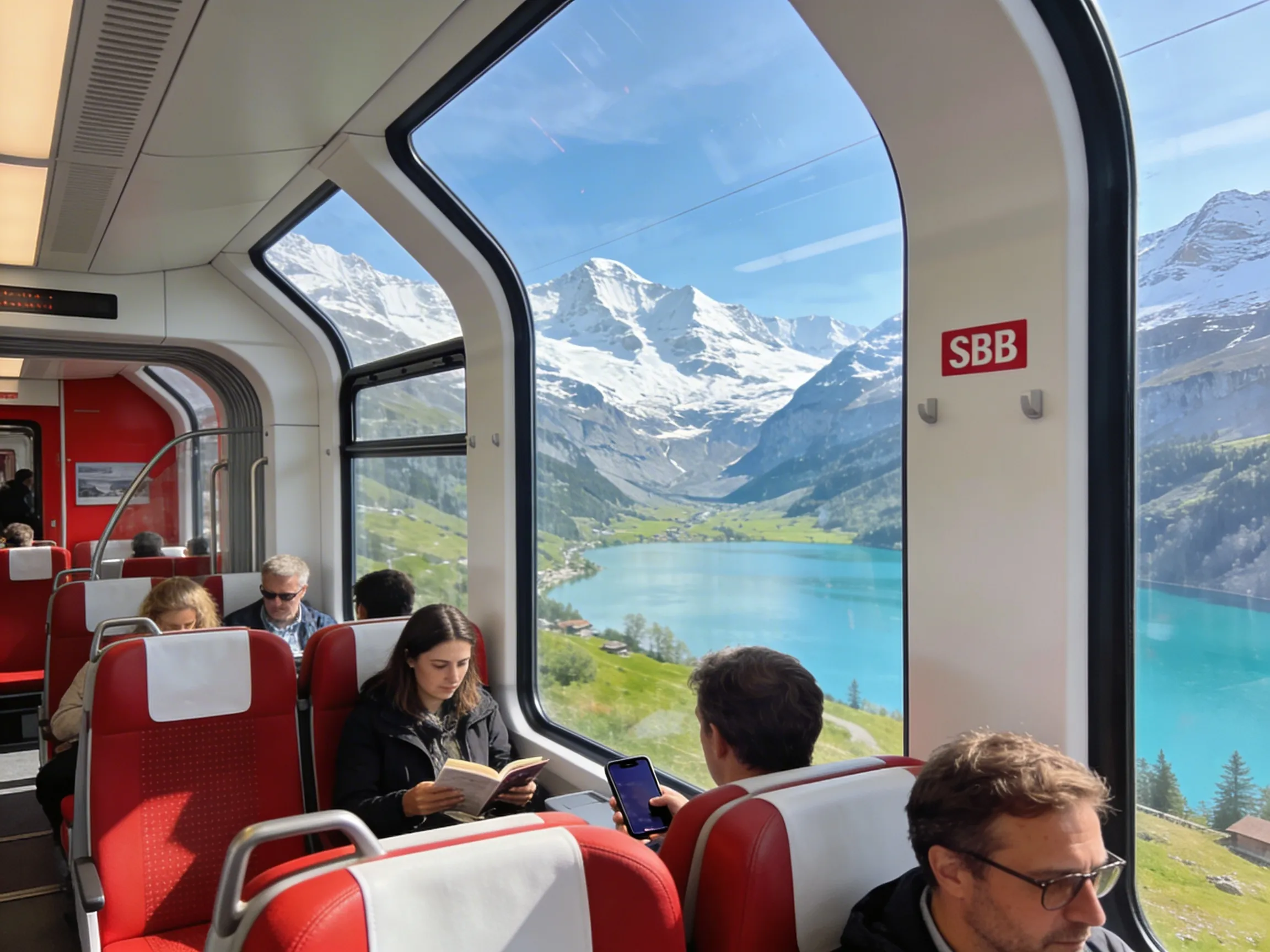
Switzerland boasts one of the most efficient public transport systems in the world. Trains, trams, buses, and boats operate in absolute harmony. You can purchase a single ticket that seamlessly covers multiple modes of transport across different regions. The Swiss Federal Railways (SBB) forms the backbone of this network, ensuring that even remote alpine villages are accessible with legendary punctuality.
While the convenience is unmatched, standard ticket prices can be notably high. Fortunately, by utilizing the right discount passes and smart booking strategies, you can drastically reduce your travel expenses. Public transport commuting costs are also tax deductible, you can learn more about in our tax deductions guide. To easily figure out which combination of tickets and passes is most cost-effective for your specific commute, use our Public Transport Optimizer. If you are debating whether to rely on trains or buy a vehicle, our Driving in Switzerland guide provides a helpful comparison.
1. Understanding the Swiss Transport Network
The brilliance of the Swiss system lies in its total integration. More than 250 different transport companies cooperate under a unified umbrella. This means one ticket covers your entire journey. You can board a train, transfer to a post bus, and finish your trip on a lake boat without ever needing to buy separate fares from different operators.
The schedules are meticulously coordinated to ensure smooth connections. To navigate this system, the SBB Mobile app is an absolute necessity. It provides comprehensive routing for every form of public transport across the country.
When planning your route, you will encounter several train categories designed for different distances and speeds.
| Code | Train Type | Purpose |
|---|---|---|
| IC / ICN | InterCity | Fast connections between major cities with minimal stops. |
| IR | InterRegio | Connects larger regions with more frequent stops than InterCity trains. |
| RE | RegioExpress | Regional routes that serve medium-sized towns. |
| S | S-Bahn | Suburban commuter networks that stop at every local station. |
For long journeys between major hubs, the InterCity trains are your best option. For local commuting or reaching smaller municipalities, you will primarily rely on the S-Bahn and regional buses. These same tickets also grant access to city trams, alpine post buses, and ferries on major lakes.
2. Essential Travel Passes for Residents
Paying full price for individual tickets is rarely the best financial decision for anyone who travels regularly. The Swiss transport network offers several subscription models designed to make frequent travel highly economical. All resident travelcards are loaded onto a SwissPass, which is a mandatory physical red card and digital account that serves as your universal key to public mobility.
The Half Fare Card
The Half Fare Card is the default standard for almost all residents. By paying an annual fee, you receive a 50% discount on virtually all public transport nationwide. This includes trains, buses, boats, and most mountain railways.
Be aware that the Half Fare Card operates as an auto-renewing annual subscription. The transport authority will automatically bill you every year unless you actively cancel it before the renewal date. If you want to see exactly how quickly the card pays for itself, plug your monthly trips into the Public Transport Optimizer.
The GA Travelcard
For heavy commuters, the GA Travelcard offers the ultimate convenience of unlimited travel. You simply board any train, bus, or boat without ever purchasing a ticket. While the annual cost is substantial, it becomes a highly cost-effective solution for professionals commuting daily across different cities. Families and couples living in the same household can also benefit from significant partner discounts when purchasing multiple GA travelcards.
Before making a purchase, check with your employer. Many Swiss companies offer generous corporate subsidies that cover part or all of your public transport travelcard costs. To see if the high upfront cost makes sense for your travel habits, run your numbers through our Public Transport Optimizer.
Point-to-Point and Modular Travelcards
If you travel the exact same route every day for work, a full national pass might be excessive. A Point-to-Point Travelcard covers unlimited travel strictly between two specific stations. Alternatively, a Modular Travelcard combines a fixed train route with unlimited access to the local bus and tram zones at your origin and destination. This setup is highly tailored and typically much cheaper than nationwide unlimited access.
3. Passes for Youth and Tourists
The network provides distinct offers tailored for younger demographics and international visitors.
Passes for Youth
Young adults under the age of 25 have access to the Night GA, which provides unlimited travel during late evening and night hours. It is incredibly popular for weekend socializing and is priced exactly at a statutory CHF 99 per year.
Passes for Tourists
For visitors and non-residents, the Swiss Travel Pass is the premier choice. It grants unlimited travel for a consecutive number of days and includes free admission to hundreds of museums.
| Traveler Profile | Recommended Pass | Primary Benefit |
|---|---|---|
| Most Residents | Half Fare Card | 50% discount on all national routes. |
| Daily Commuters | GA Travelcard | Unlimited, ticketless travel nationwide. |
| Fixed Route Commuters | Modular Travelcard | Unlimited travel on a specific route and local zones. |
| Young Adults (Under 25) | Night GA | Unlimited travel during night hours for CHF 99. |
| Tourists and Visitors | Swiss Travel Pass | Consecutive days of unlimited travel and museum entry. |
4. Smart Strategies for Buying Tickets
Even with a discount pass, knowing how to navigate the ticketing system can lead to further savings and a much smoother experience.
Utilizing the SBB Mobile App and EasyRide
The SBB Mobile app is the central hub for all travel in Switzerland. It provides real-time schedules, platform information, and instant ticket purchasing. If you create a SwissPass account and link your discount passes, the app automatically applies the correct fare reductions.
The most convenient feature within the app is EasyRide. By swiping to check in when you board and swiping to check out when you arrive, the app tracks your GPS location and automatically bills you the cheapest possible fare for the exact route you took.
Finding Supersaver Tickets
If you know your exact travel times in advance, you can purchase Supersaver Tickets through the app or website. These tickets offer steep discounts, which stack on top of your Half Fare Card benefits. However, they are strictly bound to a specific train departure. If you miss that exact train, the ticket becomes invalid and you must purchase a completely new one.
If you want the discount but need a margin of safety, choose the Supersaver Flex Ticket. This option costs slightly more but allows you to claim a 50% refund up until shortly before the departure time if your plans change.
Traveling with Children and Bicycles
The Swiss system is incredibly family-friendly. Children under the age of six travel completely free of charge. For older children up to age fifteen, parents can purchase a Junior Card for a nominal annual fee. This card allows the child to travel for free on all public transport as long as they are accompanied by a parent with a valid ticket.
If you want to bring a bicycle on the train, you must purchase a separate ticket for it. Occasional riders can buy a Bike Day Pass, while frequent cyclists can invest in an Annual Bike Pass for unlimited transport of their bicycle across the network.
5. Common Questions
6. Conclusion
Mastering the Swiss public transport network is one of the most rewarding parts of living in the country. The system provides unparalleled access to every region, making it entirely possible to live comfortably without a car. By understanding the different passes and utilizing the digital tools available, you can navigate the country efficiently and economically.
Starting with a Half Fare Card immediately upon arrival is widely considered the most practical approach for new residents, as it provides the most flexibility and quickest return on investment. Do not forget to use our Public Transport Optimizer to continually evaluate your travel habits and ensure you are always using the most cost-effective ticket combination for your needs.
Useful Resources
- SBB Official Website: The central hub for all timetable and ticket information.
- SBB Mobile App: Essential application for route planning and digital tickets.
- SwissPass Portal: Manage your travelcards and subscriptions.
- SBB Delay Compensation: Official forms to claim refunds for late trains.