If you own cryptocurrency, you need a wallet. The term “wallet” can be misleading because crypto wallets do not actually store your coins. Instead, they store the private keys that prove ownership of your assets on the blockchain. Whoever controls the private keys controls the crypto. This is why the security of your setup matters enormously. If you are just starting your investment journey, you might also want to read Best Crypto Exchanges in Switzerland to understand how to purchase your first digital assets safely in Switzerland.
This guide explains how different wallets operate, compares the most popular storage methods, and helps you decide which approach makes the most sense for your personal security needs.
1. How Crypto Wallets Actually Work
When you create a new crypto wallet, the system generates two cryptographic keys known as a public key and a private key. The public key functions exactly like a standard bank account number. You can share it freely with anyone to receive funds. The private key acts as your secure PIN or password that officially authorizes outgoing transactions. Anyone who gains access to your private key can instantly spend your crypto.
Most wallets also generate a recovery phrase, which is sometimes called a seed phrase. This is a unique sequence of 12 or 24 standard words. This phrase can completely regenerate your private keys if you ever lose physical access to your wallet. You must store this phrase offline securely and never share it with anyone under any circumstances.
| Concept | What It Does | Security Rule |
|---|---|---|
| Public Key | Allows others to send you crypto | Safe to share publicly |
| Private Key | Authorizes outgoing transactions | Never share with anyone |
| Recovery Phrase | Restores your entire wallet if lost | Never share, store offline only |
The fundamental principle of digital asset security is simple. Not your keys, not your coins. If a third party like an exchange or a custodial service holds your private keys, they ultimately control your funds.
2. Hardware vs. Software Wallets
Crypto wallets fall into two primary categories based entirely on how they store your private keys.
Hot wallets keep your private keys on a device that is actively connected to the internet. This category includes mobile applications, desktop software, and web browser extensions. Hot wallets are incredibly convenient for everyday use and frequent trading. However, their constant internet connection makes them significantly more vulnerable to online attacks, malware, and phishing attempts.
Cold wallets store your private keys entirely offline and disconnected from the internet. Hardware wallets are the most common and secure type of cold storage. They provide robust protection against remote digital attacks. They require a physical device to authorize transactions, which adds a slight layer of effort to your daily use.
| Wallet Type | Connection | Security Level | Best Use Case |
|---|---|---|---|
| Hardware Wallet | Offline (cold) | Highest | Long term storage and large holdings |
| Desktop Wallet | Online (hot) | Medium | Regular use with basic security |
| Mobile Wallet | Online (hot) | Medium | Daily transactions and convenience |
| Browser Extension | Online (hot) | Lower | Interacting with decentralized apps |
| Exchange Custody | Online (custodial) | Variable | Active trading rather than storage |
You must also understand the vital difference between custodial and non-custodial wallets. Custodial wallets mean a corporate third party officially holds your private keys. Non-custodial wallets give you absolute, exclusive control over your keys. This grants you true ownership but also demands complete personal responsibility for your security.
3. Leading Wallet Options
The market offers excellent options across both hardware and software categories. Your choice will depend heavily on your technical comfort level and the total value of your digital assets.
Hardware Wallet Leaders
Hardware wallets are physical devices that store your private keys inside a secure microchip. When you sign a transaction, the private key never actually leaves the device. Even if your personal computer is heavily infected with malware, your cryptographic keys remain protected.
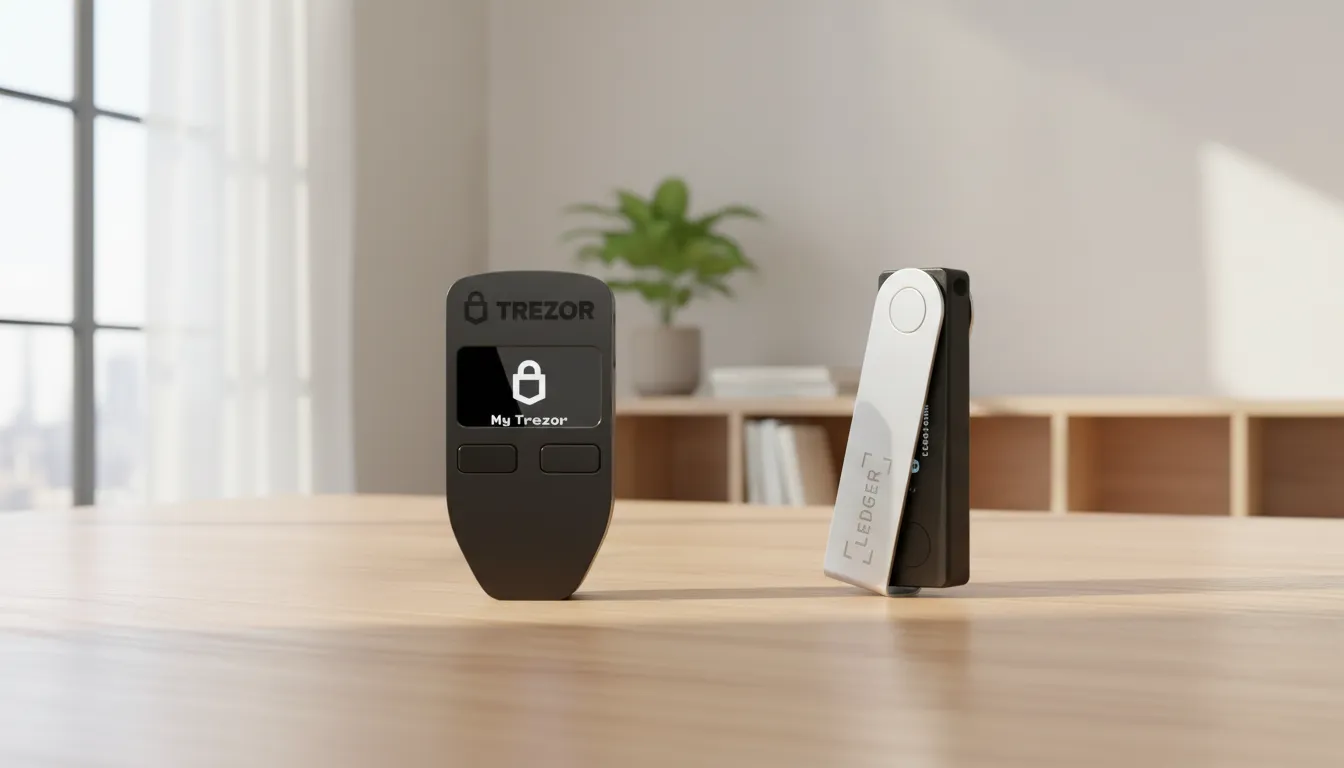
The two dominant market leaders are Ledger and Trezor. Both companies have operated for over a decade and have sold millions of devices globally.
Ledger devices utilize a certified Secure Element chip, which is similar to the technology found in modern credit cards and biometric passports. This provides exceptional protection against direct physical tampering. Ledger offers various models at different price points, ranging from compact USB-style drives to premium touchscreen devices.
Trezor takes a different philosophical approach by utilizing fully open-source hardware and software. Anyone in the public can audit their code. This high level of transparency allows the global security community to independently verify that there are absolutely no hidden vulnerabilities.
Software Wallet Leaders
Software wallets offer superior convenience but naturally come with increased security risks due to their internet connectivity. They install directly as applications on your computer or smartphone.
Exodus provides a highly polished visual interface with support for a massive variety of different coins. It integrates seamlessly with both Ledger and Trezor hardware wallets for enhanced security. It is highly recommended for beginners looking for multi-coin support.
Electrum is a veteran desktop wallet strictly dedicated to Bitcoin. It is completely open-source and extremely lightweight. Security-conscious Bitcoin purists frequently prefer Electrum for its advanced technical features, including robust hardware wallet integration and multi-signature capabilities.
MetaMask heavily dominates the Ethereum ecosystem. It functions primarily as a browser extension and mobile app. MetaMask is an absolutely essential tool if you plan to interact with decentralized finance protocols or digital marketplaces.
4. Wallet Security Best Practices
Regardless of the specific wallet software or hardware you choose, strictly following security best practices will dramatically reduce your risk of losing funds.
Protecting Your Recovery Phrase
Your recovery phrase is the ultimate master key to all your crypto assets. You must treat it with extreme caution.
- Write it down on physical paper. Never type it into a digital document, save it in a password manager, take a photograph of it, or upload it to cloud storage.
- Store multiple copies in distinct secure locations. Consider using a fireproof home safe or a bank safety deposit box.
- Never share it with customer support. No legitimate company, exchange, or support agent will ever ask you for your recovery phrase.
- Consider metal backup tools. Specialized metal plates can protect your phrase from severe fire and water damage.
General Security Habits
Always enable two-factor authentication on every single crypto-related account to add a critical second layer of protection. You must use unique, complex passwords to ensure that one single data breach does not compromise your entire financial life.
When sending funds, verify the destination address carefully. Malicious software can secretly replace copied addresses on your computer clipboard. You should always send a tiny test transaction first to confirm the address is entirely correct before transferring any large, meaningful amounts. Finally, always be highly skeptical of unsolicited messages on social media or email. The vast majority of people reaching out to offer “support” or “investment opportunities” are attempting to steal your funds.
5. Common Questions
6. Conclusion
Selecting the right crypto wallet ultimately requires balancing your need for daily convenience against your requirement for absolute security. The more digital wealth you accumulate, the more critical robust security measures become.
A highly practical approach for most standard investors is a combination setup. You can use a reputable hardware wallet, like Trezor, to securely protect the vast majority of your long-term holdings offline. You can simultaneously maintain a smaller software wallet on your phone or browser for daily convenience, quick trading, and interacting directly with decentralized applications.
If you are a beginner with a small portfolio, a reputable open-source software wallet is a perfectly acceptable starting point. As your investments grow, upgrading to a dedicated hardware device becomes a logical and necessary security precaution. The upfront cost of a physical wallet serves as excellent, low-cost insurance against devastating online hacks.
Whatever storage method you choose, you must protect your recovery phrase diligently. You are entirely responsible for your own financial security in the digital asset space.
Useful Resources
- Ledger Official Site
- Trezor Official Site
- MetaMask Official Site
- Electrum Official Site
- Exodus Official Site
Cryptocurrency investments are highly volatile and risky. This guide is for informational purposes only and does not constitute financial advice. Only invest what you can afford to lose.