Switzerland has earned its nickname as the global “Crypto Valley” for good reason. The Ethereum Foundation calls it home, blockchain startups thrive here, and the regulatory framework is among the most progressive in the world. If you are a Swiss resident looking to invest in Bitcoin, Ethereum, or other digital assets, you have plenty of highly accessible options.
The real challenge is picking the right platform. Fees vary wildly between providers, security practices differ significantly, and not every platform suits Swiss residents who simply want to invest without unnecessary complexity. This guide focuses on private individual investors rather than companies or professional trading desks.
1. Understanding the Different Platform Types
Before diving into specific recommendations, it helps to understand the three main categories of crypto platforms available to Swiss residents. Each comes with its own trade-offs in terms of fees, regulation, and features.
| Platform Type | Examples | Strengths | Weaknesses |
|---|---|---|---|
| Swiss Banks | Swissquote, PostFinance, SEBA Bank, Sygnum | FINMA regulation, banking integration, Swiss jurisdiction | Higher fees, limited coin selection |
| Swiss Crypto Platforms | Bitcoin Suisse, SwissBorg, Pocket Bitcoin, Mt Pelerin | Crypto expertise, Swiss jurisdiction, specialized features | Less liquidity, may lack banking features |
| International Exchanges | Kraken, Coinbase, Binance, Crypto.com | Lower fees, more coins, higher liquidity | Not Swiss regulated, potential bank transfer issues |
Swiss banks like Swissquote were pioneers in offering cryptocurrency through traditional banking channels. They provide the ultimate comfort of strict FINMA regulation and seamless integration with your existing fiat accounts. However, this convenience comes at a premium, with transaction fees often exceeding 1%.
Swiss crypto platforms occupy an interesting middle ground. Bitcoin Suisse offers white-glove service at premium prices, while SwissBorg provides a polished app experience with smart order routing. Pocket Bitcoin has carved out a specialized niche for Bitcoin-only investors who want simple, recurring purchases directly through automated bank transfers.
International exchanges remain the go-to choice for cost-conscious investors. Binance is the largest crypto exchange in the world by trading volume and offers the lowest fees in the industry. Kraken provides professional trading tools with a legendary security track record. Coinbase offers excellent educational content for beginners, though its baseline fees are higher than the competition.
2. Fee Comparison Across Platforms
Transaction fees can quietly erode your returns over time. Understanding the true cost of each platform matters more than most people realize.
| Platform | Maker Fee | Taker Fee | Notes |
|---|---|---|---|
| Binance | 0.05% to 0.10% | 0.05% to 0.10% | Lowest fees globally, largest exchange |
| Kraken | 0.16% | 0.26% | Professional tools, solid security history |
| Coinbase Pro | 0.40% | 0.60% | Higher than competitors but highly beginner-friendly |
| SwissBorg | Varies | Varies | Smart routing, easy CHF deposits |
| Swissquote | 0.50% to 1.00% | 0.50% to 1.00% | Swiss bank, fully FINMA regulated |
| Bitcoin Suisse | ~1.25% | ~1.25% | Premium service, high minimums |
The difference becomes substantial with larger investments or frequent trading. Over years of regular investing, this fee gap compounds into a very meaningful amount of lost capital.
Keep in mind that the standard retail Coinbase app charges significantly higher fees than Coinbase Pro (now Advanced Trade). If you choose Coinbase, you must use their advanced interface to secure competitive trading rates.
3. Security and Custody
Security should be your absolute top priority when choosing where to hold digital assets. The major platforms differ significantly in their approach to protecting customer funds.
| Platform | Cold Storage | insurance | Regulation |
|---|---|---|---|
| Swissquote | Yes | Swiss banking protection | FINMA |
| Bitcoin Suisse | Yes | Partial | FINMA |
| Kraken | 95%+ | Partial | US regulated |
| Coinbase | 98%+ | Hot wallet coverage | Multiple global licenses |
| Binance | Yes | SAFU fund | Varies by jurisdiction |
For any holdings beyond what you actively trade on a daily basis, self-custody with a hardware wallet remains the gold standard for security. By holding your own keys, you eliminate exchange bankruptcy risk entirely, though you must take full responsibility for safely managing your recovery phrases. For an in-depth comparison of the best self-custody options, read Best Crypto Wallets in Switzerland.
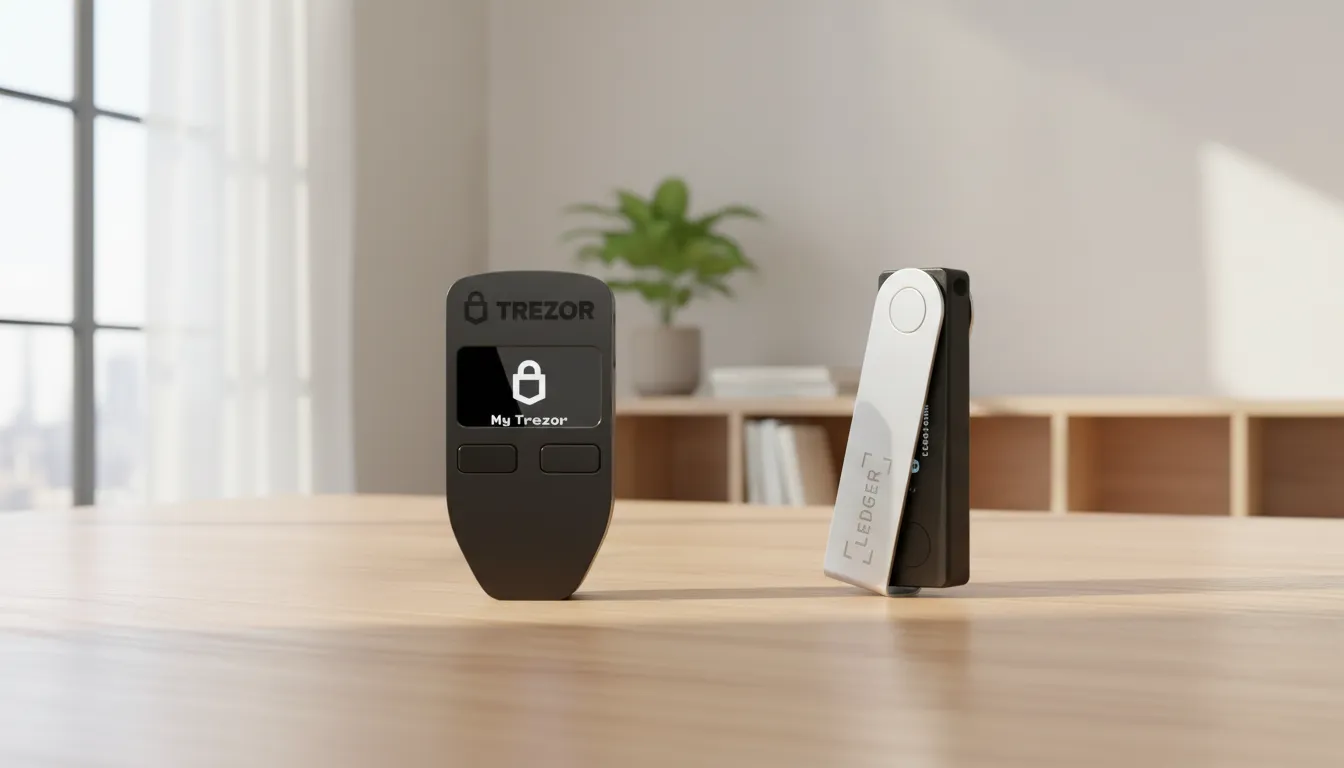
When it comes to hardware wallets, the two undisputed market leaders are Ledger and Trezor. Both have proven track records and robust security architectures. A hardware wallet keeps your private keys completely offline, which protects your wealth from remote hackers and exchange failures.
If you prefer a software wallet for smaller amounts or frequent decentralized application access, you should exclusively use open-source options. Open-source wallets allow the global security community to audit the underlying code and verify there are no hidden vulnerabilities.
A highly practical approach combines exchange convenience with wallet security. Keep your active trading funds on a reputable exchange, but systematically move your long-term investments to a hardware wallet.
4. Tax Treatment for Swiss Residents
One of Switzerland’s biggest advantages for crypto investors is its highly favorable tax treatment. Private investors pay zero capital gains tax on cryptocurrency profits. If you buy Bitcoin and later sell it at a massive profit, you keep the entire gain tax-free.
However, not all crypto-related income enjoys this favorable treatment.
| Income Type | Tax Treatment |
|---|---|
| Capital gains (buy and hold) | Not taxed for private investors |
| Staking rewards | Taxable as standard income when received |
| Mining income | Taxable as self-employment income |
| Airdrops | Taxable as income at their receipt value |
| Wealth tax | Taxable based on the December 31 portfolio value |
There are important legal boundaries to this tax-free capital gains treatment. If you trade very frequently, use significant leverage, or derive the vast majority of your income from crypto trading, the tax authorities may classify you as a professional trader. If that happens, your capital gains suddenly become fully taxable income.
For your annual tax return, you must report the total combined value of all your crypto holdings as of December 31, using the official federal exchange rates. You must include everything across all your wallets and exchanges. Most Swiss tax software now explicitly supports cryptocurrency declarations, but you can read Swiss Taxes Made Simple for more details on declaring your global wealth.
5. Choosing the Right Platform for Your Needs
Different investors have vastly different priorities. The best platform depends entirely on your technical comfort level and how you plan to manage your assets.
| Your Priority | Recommended Platform | Why |
|---|---|---|
| Swiss regulation and simplicity | Swissquote | FINMA regulated, familiar banking interface |
| Lowest fees and wide selection | Binance | Largest exchange, lowest fees, most trading pairs |
| Easy mobile experience | SwissBorg | Polished app, direct CHF deposits, smart routing |
| Bitcoin-only recurring buys | Pocket Bitcoin | Simple bank transfer setup, fully DCA focused |
| Exposure without crypto complexity | 21Shares ETPs | Buy through your existing stock broker |
For active traders, Binance provides the best combination of ultra-low fees, high liquidity, and extensive trading pairs. As the largest exchange by volume, you will always find immediate buyers and sellers for your trades. Kraken is an excellent alternative that offers professional tools alongside a stellar security reputation.
6. Getting Started Safely
Once you have chosen a platform, the onboarding process strictly requires identity verification (KYC). You will need a government-issued ID, a recent proof of address, and sometimes documentation proving your source of funds.
For funding your new account, bank transfers (via SEPA or Swiss domestic networks from your Swiss bank account) usually take one to three business days but cost little to nothing. You should actively avoid using credit cards to buy crypto; card payments process instantly but typically charge punitive 1.5% to 3.5% fees, which destroys your investment capital immediately.
When making your first purchase, use limit orders rather than market orders to ensure you get exactly the price you want. You should also strongly consider dollar-cost averaging (DCA) by making regular, smaller purchases every month instead of trying to time the unpredictable market.
For basic account security, you must enable two-factor authentication (2FA) immediately using an app like Google Authenticator. Never rely on SMS for your 2FA, as SIM-swapping attacks are highly common in the crypto space.
7. Common Mistakes to Avoid
A few expensive mistakes show up repeatedly among new crypto investors.
Paying high fees on regular trades adds up faster than most people expect. A 1.5% fee per trade might seem acceptable initially, but active traders can easily lose thousands of francs per year to transaction friction.
Leaving large amounts on exchanges exposes you to catastrophic, unnecessary risk. Massive exchanges have been hacked, and major platforms have gone bankrupt, taking all customer funds with them. You must move significant long-term holdings to your own hardware wallet.
Poor record keeping creates massive headaches during tax season. The authorities may ask about your source of funds, and you will need documentation for every purchase, sale, and transfer.
Emotional trading remains the fastest way to lose money in crypto. Buying during peak hype and panic-selling during crashes destroys wealth. A boring, automated dollar-cost averaging strategy mathematically beats emotional market timing over the long run.
8. Staking and Earning Yield
Staking allows you to earn passive rewards by locking up certain cryptocurrencies to help secure their underlying blockchain networks.
Most major platforms now offer simplified staking services for popular coins. Yields fluctuate constantly depending on the coin, the platform, and broader network conditions. While Binance tends to offer the widest selection of high-yield options, Swiss platforms like Swissquote offer a highly curated, safer list of established assets.
You must remember that staking rewards count as fully taxable income in Switzerland. They are valued at their exact market price on the day you receive them. You must report this income on your tax return, requiring meticulous record-keeping.
Staking also carries unique risks. Lock-up periods may legally prevent you from selling your assets during a sudden market crash. Validator technical mistakes can result in “slashing”, where a portion of your staked crypto is permanently destroyed as a penalty.
9. Crypto ETPs as an Alternative
If managing private keys, hardware wallets, and new exchange accounts feels too complicated, exchange-traded products (ETPs) offer direct crypto exposure through your traditional stock brokerage account.
Products from providers like 21Shares track Bitcoin, Ethereum, and various diversified crypto baskets directly on the SIX Swiss stock exchange.
| Aspect | Direct Crypto | Crypto ETPs |
|---|---|---|
| Ownership | You own the actual digital coins | You own shares in a regulated fund |
| Custody | A personal wallet is required | Handled safely by the product issuer |
| Trading hours | 24/7 global market | Stock exchange business hours only |
| Fees | Exchange transaction fees only | An annual expense ratio (TER) |
| Tax reporting | Track manually or via the exchange | Standard Swiss securities tax statement |
ETPs make perfect sense for traditional investors who want basic crypto exposure without learning the technical nuances of blockchain security. The trade-off for this convenience is higher ongoing annual fund fees and a much more limited selection of available assets compared to buying crypto directly.
10. Conclusion
Switzerland offers arguably the best environment in the world for private cryptocurrency investors. The unique combination of zero capital gains tax, a highly defined regulatory framework, and easy access to both domestic and international platforms creates an enviable position for building digital wealth.
After analyzing the available market options, the most effective strategy for a general investor is to utilize a low-cost international exchange like Binance for all active trading, and subsequently transfer all long-term holdings to a Trezor or Ledger hardware wallet for maximum offline security.
If Swiss jurisdiction is absolutely non-negotiable for your peace of mind and you already have a Swiss bank account with Swissquote, their integrated crypto offering is an excellent, highly secure alternative despite the elevated fee structure. For complete beginners who value an intuitive mobile experience above all else, SwissBorg provides a polished entry point with seamless direct CHF deposits.
Whatever platform you choose, you must remember that staking rewards are fully taxable even though capital gains are not. Keep meticulous records of all your transactions, enable strict 2FA security on every account, and carefully manage your self-custody practices.
Useful Resources
- Binance for the largest international exchange and lowest fees
- Kraken for a highly secure, low-cost trading alternative
- Swissquote Crypto for a fully regulated Swiss bank offering
- SwissBorg for an intuitive, beginner-friendly Swiss mobile app
- Ledger for industry-leading hardware wallets
- Trezor for open-source hardware wallet security
- FINMA FinTech for official Swiss regulatory information
Cryptocurrency investments are highly volatile and carry significant risk. This guide is for informational purposes only and does not constitute financial advice. Always conduct your own research before investing.